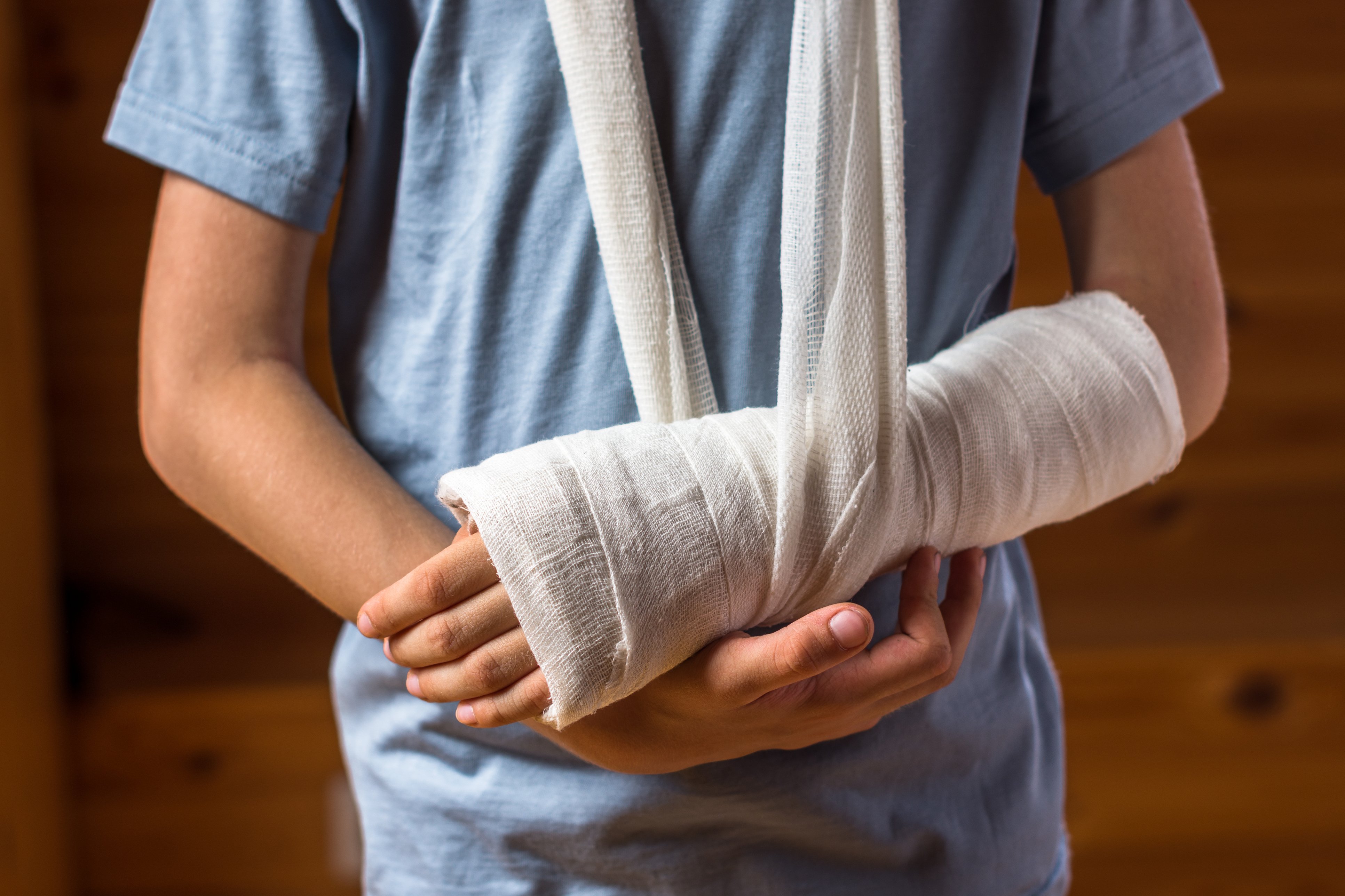
Your child has broken their arm just above the elbow. The medical name for this is a supracondylar humerus fracture. Your child may need surgery to treat this fracture if the broken pieces are not well aligned.
Your child may have been placed in a back slab or a splint (a cast that goes halfway around the arm) as a first aid treatment measure. A sling may have been provided to support the arm and keep the arm in a comfortable position prior to your child’s surgery.
Will my child need surgery?
X-ray imaging will help the health-care team see if the broken pieces are not well aligned and your child will need surgery to realign the broken bones.
What to expect before surgery
Once the orthopaedic team, or bone doctors, have determined that your child should have surgery, they will discuss the benefits and risks of the surgery with you, and they will document your consent to surgery.
Depending on the situation, your child may be admitted to the hospital to be added to the hospital’s surgery waitlist or be given a time to come for surgery on a different date.
Your child will receive general anesthesia so that they sleep during the surgery and do not feel any pain. Your child will need to stop eating and drinking several hours before receiving anesthesia. You will receive fasting or NPO (nothing by mouth) guidelines to follow. If these guidelines are not followed, the surgery will be cancelled and rescheduled for the safety of your child.
Information on how to prepare your child for surgery can be found in the Coming for Surgery Learning Hub.
In the operating room for elbow fracture surgery
In the operating room, the nurse will help your child settle in. The anesthesiologist will give your child sedating medicine. The process of induction of anesthesia (going to sleep) will be a bit different for everyone. Here are some general details of the journey for your child:
- Your child will go into the operating room (OR) with a health-care provider. Hospitals may allow parents/caregivers to walk children into the operating room. Talk to your child's health-care team to discuss this option.
- Once your child is in the OR, the health-care provider will help them lay down on the bed and make sure they are comfortable.
- Monitors are attached to your child, which will help the health-care team look after them closely during surgery.
- There are different ways to go to sleep — sometimes through a mask and sometimes IV. The anesthesiologist will decide what the best option is for your child.
- If an IV is required, numbing cream may have been applied to the site to help reduce the discomfort of inserting the IV.
- The medicine given through the mask or IV will make your child fall asleep. They will also be given pain medicine to help them stay comfortable.
- During the surgery, the medicines given will ensure your child does not feel, hear or see anything and that they stay asleep until the surgery is finished.
Once your child is completely sedated, the back slab or splint will be removed.
During the surgery, the health-care team will use X-ray imaging to guide them to properly align the broken elbow. They will place metal pins, also known as K-wires, at the elbow to hold the pieces together so that the bones can heal.

The ends of the pins will stick out of the skin. The health-care team will apply a dressing to cover the metal pins. They will also apply a new cast with your child’s elbow. You will not be able to see the metal pins or wires as they will be under the cast.

If, during the surgery, it is difficult to properly align the broken elbow with K-wires, the surgeons may need to make an incision at the elbow and use other metal hardware to hold the bones in place. After the bones are aligned, the surgeons will close the incision with stitches and cover them with a dressing. Your child will have a new cast applied to their arm once the surgery is complete.
After elbow surgery
Once the surgery is finished, your child will wake up in the Post-Anesthetic Care Unit (PACU) or recovery room. Specially trained health-care providers will regularly check your child's breathing, heartbeat, temperature and blood pressure. Your child will wake up soon after the surgery. You can be with your child as soon as they wake up.
- Your child may feel dizzy and unsteady for up to six to eight hours after an anesthetic or sedation.
- On the day of surgery, your child should do quiet activities such as watch videos or TV or listen to music.
- Give your child lots of clear liquids (e.g., water or liquid in the form of Jello) to start with. Once your child is comfortable with this (no vomiting/diarrhea), offer an easily digestible meal (e.g., crackers, bananas or toast).
- If your child has an upset stomach or vomits, keep giving them small amounts of clear liquids often. You can also try giving your child a small amount of food, such as crackers or toast.
Pain and swelling are common in the first 24 to 48 hours after surgery. The health-care team will be monitoring for any changes to the colour and temperature of your child’s skin and any stiffness or numbness in the hands and fingers. After the health-care team ensures that your child is comfortable with a pain management plan, you and your child will go home. A follow-up in clinic appointment will be scheduled for three weeks after the surgery to remove the cast and take the pins out.
Will there be complications?
Most children do not have any complications after elbow surgery. However, it is important to know that complications are possible and that they may affect your child’s surgery experience.
If your child has a complication from surgery, it may affect their experience in different ways. They may have more pain or need more surgery. Their hospital stay may be longer than usual, or they may need to take more medication for a longer period of time. Your child’s surgeon will outline the potential risks of elbow surgery when you sign the surgical consent form.
Cast care
- Keep the splint or cast clean and dry at all times.
- The cast cannot get wet; sponge baths are recommended.
- If needed, clean the cast with a damp cloth or use a hair dryer on a cool setting.
- Do not put anything inside the cast to scratch. It is normal for the skin under the cast to feel itchy
- Do not cut or alter the shape of your child's cast.
- Check the cast daily for:
- circulation
- sensation
- movement
- skin along the cast edges for blisters or redness
For more information, please see Cast care: Arm or leg cast.
Follow-up appointments after surgery
Your child will have a follow-up appointment at the fracture clinic three weeks after their surgery.
What to expect at this appointment:
- The cast will be removed.
- Any pins will be removed.
- A health-care provider will examine your child’s arm.
After this visit, you may be invited for another appointment at 12 weeks post-surgery for a follow-up clinical examination. If your child is expected to have a follow-up after 12 weeks and you do not receive a phone call or appointment, please contact the fracture clinic.
When to seek medical attention after elbow fracture surgery
Non-urgent inquiries can be addressed at your follow-up appointment at the fracture clinic. Please seek medical attention sooner if your child experiences any of the following:
- Increased pain
- Unusual drainage from the fracture site
- Fever higher than 39°C (102.2°F)
- Increased swelling in fingers or toes
- Changes in colour of fingers or toes (pale or bluish)
- Pain that does not improve with repositioning, movement or prescribed pain medication
If your child requires immediate or urgent care, contact their health-care provider, call 911 or go to your nearest emergency department.
At SickKids
General concerns
For general concerns, you may contact the fracture clinic at fracture.clinic@sickkids.ca.
Follow-up phone calls or appointments
If you do not receive a phone call or follow-up appointment after your child’s surgery, please contact the Orthopaedic Clinic:
Main Floor, Roy C. Hill Wing (near Tim Hortons)
Tel: 416-813-5840